
Center area
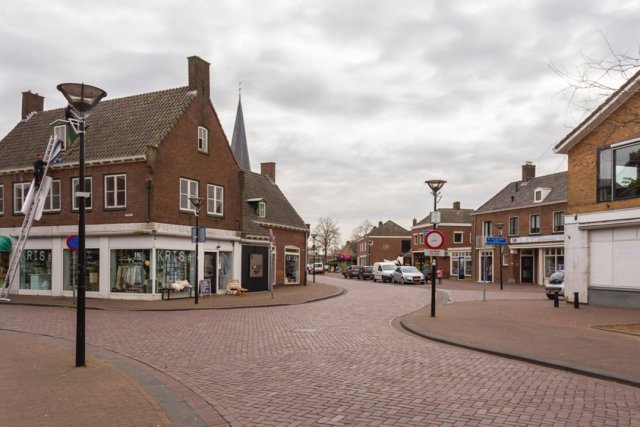
We only have a real center area in Aalten and Dinxperlo. Bredevoort has a small central square. In the center area, we see various light sources, such as public lighting (lampposts), light from shops (shop windows), advertising lighting, festive lighting, and/or illuminated facades. All these light sources together ultimately determine the light on the street.
Decorative masts and fixtures
In the center of both Dinxperlo and Aalten, there are decorative poles/fixtures. These may be a different model of fixture combined with a different color pole. In Bredevoort, there is classic lighting in the center. We refer to all of these as decorative poles/fixtures. Outside these areas, we have functional poles and fixtures.
Laws, regulations and labels
There is a guideline in the Netherlands that gives advice on the amount of light. This is the NPR13201/2018. There is an advice for the amount of light on the road (the horizontal light intensity), the distribution of light on the road (uniformity) and the amount of light at 1.5m height (the vertical light intensity). We are not obliged to light. However, we must always ensure road safety, but that does not require light.
There is often a bit more lighting in the true downtown area than elsewhere in the community.
In addition to the directive, there is also the voluntary KVO (Quality Mark for Safe Entrepreneurship). Here agreements are made together with the entrepreneurs, fire department, police and municipality about lighting, among other things.
For advertisements, there is the NSVV (Dutch Foundation for Lighting Science) Light Nuisance Directive. This indicates how much light is allowed to radiate on a facade.
Rijkswaterstaat's handbook and the CROW publication "Advertising along roads" gives advice on, for example, the angle of placement, appearance of light, etc.
Atmosphere and livability
Lighting can affect the atmosphere and livability in a downtown area. Light color certainly plays a role in this. After all, it also affects social safety. Social safety can be divided into:
- Objective social safety: is measurable, such as the number of burglaries. Many burglaries occur during the day when people are running errands and leaving a window open.
- Subjective social safety: is the feeling of safety. It is not measurable and is different for everyone. What are your experiences? How well do you know the environment? What are you used to? These and many other factors determine your sense of safety. Social safety is a lot harder for us to deal with than, say, traffic safety.
The color of lighting helps determine social safety. With some lighting colors, everything appears red, such as certain orange colors. The photos below show the same color trays. The first photo shows the actual colors. The orange lighting makes the trays in the second photo all appear orange/red.

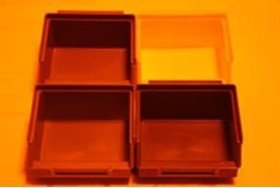
So if lighting is an orange color and something happens, we don't see the true colors. If there is an emergency, we might give the wrong description. Proper color rendering gives a good representation of reality and good face recognition.
Light and safety
We often hear that lighting is needed for burglary prevention. But lighting is only useful if there are people who can respond. Burglars may even benefit from light. In some situations, an alarm system or a light that turns on by a sensor when someone approaches is more effective. A security camera should be appropriate for what it should record. For example, faces or license plates.
Mood lighting, flower boxes, banners, etc.
At the end of the year, during the dark months, atmosphere in the center is even more important. Lighting can play a role in this. During this period, mood lighting is allowed at certain locations. The shopkeepers take care of this in consultation with the municipality. We do not have illuminated advertising bins on lampposts now.
Illuminated advertising
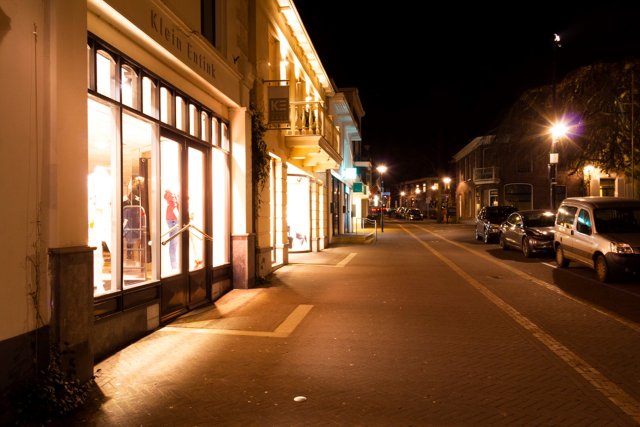
Every business owner is proud of his business and wants to show off what he sells. But there is often a lot of light at night. For example, because the light from the shop windows is so bright, the lights on the street must also be brighter. This is because it creates a kind of dark hole on the street.
Advertisement
Advertising may not be placed everywhere. The Welstandsnota clearly indicates where they can and cannot be placed. Displays are large screens that are illuminated. Sometimes they contain changing or flashing images. This can be done with various techniques such as LED or LCD. These displays can be distracting in the landscape. Usually they do not contribute to road safety.
For large billboards/advertising masts/led displays and the like, a lighting plan is required with the application for an environmental permit. This must demonstrate that the illuminated advertising will not cause light pollution to nearby residents and traffic. The light level of the advertising must not exceed the existing light level in the area. In addition, the plan must show, that the energy consumption is reduced as much as possible by the application of energy efficient, sustainable lighting which is dimmed in the evening and switched off at night.
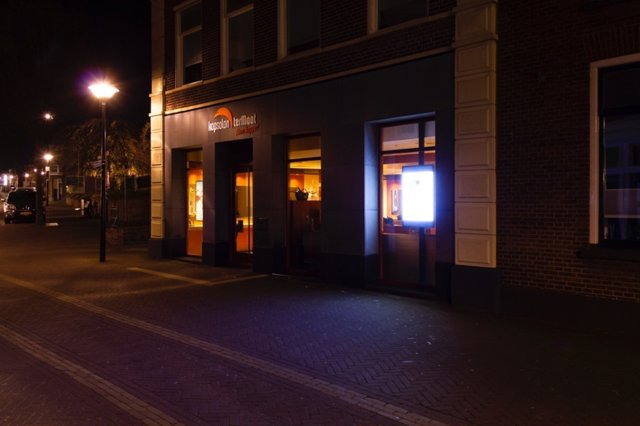
We also see these displays in shop windows and the like. These radiate into public spaces and can cause light pollution and/or light nuisance.
Sensors
Sensors (also called sensing systems) can cause lights to come on when the particular public space is used. Or that it comes on a little brighter. After presence, the light goes off again or turns on less brightly. This way we save energy, and it is also much better for flora and fauna.
This is how we do it from now on
- We use a different shape or color mast to distinguish between center area and other areas (decorative lighting instead of functional lighting).
- We dim the lights after 7 p.m.
- We look closely at the effect of street lighting on the atmosphere and livability in the downtown area.
- For the Safe Business Certification (KVO), this policy plan, "Light in the municipality of Aalten," is decisive for lighting as a whole.
- Where desirable and financially possible, we use sensors so that lights are on at night only when people are using public spaces.
- The color of the lighting ensures proper color reproduction that allows face recognition. Often this is white light.
- In downtown parking lots, lights are dimmed after 7 p.m. in the evening. Where no or little use is made of lights, they are turned off at night or after closing time if possible.
- Illuminated advertising on lampposts is not permitted.
- Flower boxes, mood lighting and the like are allowed only in designated locations and in consultation with the municipality.
- Illuminated advertising is permitted in the downtown area only in designated locations.
- For large billboards/advertising masts, LED displays/lcd screens and the like, a lighting plan must also be submitted with the application for an environmental permit. We set requirements for the color of light, the amount of light and the appearance. Flashing illuminated advertisements/led displays/lcd screens are not permitted anywhere.
- Illuminated displays in shop windows are not appreciated. In any case, no nuisance must be caused to the physical living environment and road safety must not be endangered. Also, at least in the evening, lights must be dimmed after 7 p.m. and off at night.
- We adhere to the "Light Nuisance" guidelines of the Dutch Foundation for Illumination Science, the manual of the Department of Public Works and the CROW publication "Advertising along Roads. We include new guidelines relevant to displays/screens and billboards.
- We do not adhere to the NPR13201. In the shopping area there is a bit more light than in the rest of the center There we keep to a maximum of 75% of the horizontal light quantity. However, we do try to get the uniformity as good as possible with existing mast spacings.
- We engage with downtown business owners on sustainability, energy conservation, light pollution, atmosphere and livability.