
Energy and environment
"Sustainability means that the choices made are consistent with the needs of the present without compromising the ability of future generations to meet their own needs.
In the 2019 Greenlo Accord, our municipality's goal was to be energy neutral by 2030. With the update of the Greenlo Accord, this has become as soon as possible but no later than 2050. This means that we generate all the energy we need as a society locally sustainably from sun, wind and heat. This can only be done together with our residents and entrepreneurs. The first step is to drastically reduce our current energy consumption. This can be done by insulating our homes, offices and business premises and by using low-energy and -efficient appliances. We can all start immediately by taking a conscious look at our current energy consumption to avoid waste. So we as a municipality are also committed to this.
Agreement of Groenlo
Recently (2023) the Greenlo Accord was updated. The importance of being energy neutral is stressed by all municipalities.
"We face a major task of sustainability. And the current energy crisis gives our task even more urgency. As individual municipalities, we cannot get the task done. Together we are stronger. With this new agreement, all eight Achterhoek municipalities endorse the great importance of cooperation in this area."
Energy Agreement
In addition to our ambition, there is also the national Energy Agreement. It has been agreed for public lighting that the Netherlands will save 50% energy in 2030 (compared to 2013). This is a considerable task. We also had to have 40% smart lighting and 40% energy-efficient lighting by 2020.
Nationwide, public lighting accounts on average for about 35% of a municipality's energy consumption. Energy-efficient public lighting therefore makes a significant contribution to reducing energy demand. By applying only LED lighting, we will not reach the 2030 target.
Gelderland Energy Agreement
The Gelderland Energy Agreement GEA (2014) agreed that we would emit 55% less CO2 by 2030 (compared to 2013 levels) and be climate neutral by 2050.
Global Goals
The 17 Global Goals are important to the municipality of Aalten. With this policy plan we contribute to the Global Goals listed below:
 | Good health and well-being: we contribute to this by looking more consciously at where, how much and when we need light. After all, light affects human health and nature. |
 | Affordable and sustainable energy: By using less energy and using renewable energy. |
 | Sustainable cities and communities: We are committed to sustainability. In doing so, we look at whether light is needed, how much and at what times. The new materials we use are as sustainable as possible. |
 | Climate action: we achieve this by using less energy, using sustainable materials and paying attention to the effect of light on flora and fauna in conjunction with reducing lighting. |
Energy Counter
Together with Achterhoek municipalities, we have an energy desk. On the special municipal page of the Energieloket Achterhoek you can see what savings and energy generation programs, subsidies and loans are currently available in our municipality and what advisory services Energieloket Achterhoek offers to residents.
Led Lighting
For public lighting, LED lamps have been around for several years. For lighting in homes, LEDs have been on the markt for several years. Leds are small point sources that provide a lot of efficient light.
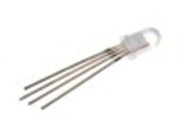
Led can be dimmed well and gives full power immediately. It is very directional light, which sometimes makes it look like it gives less light on the street. While it actually gives more light on the street than with the old lighting. Sometimes you see no light when you look into the street while it is there. This is because the other, older, light sources give more stray light. The front gardens and facades of houses were then often lit as well. Many people find that annoying. With LED lighting, the light is more focused, so house facades are no longer illuminated.
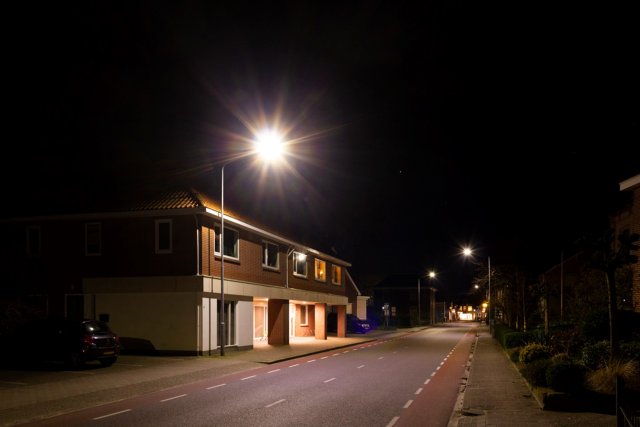
Leds are available in different colors. The bluer the light, the more energy-efficient and efficient it is. Using LED lighting not only decreases energy consumption but also reduces maintenance costs. We already have a lot of LED lighting. In the coming years, everything will become LED because conventional light sources will no longer be made.
Limiting light pollution to flora and fauna
Excess artificial lighting at night disrupts plant and animal life. Consequences of this disturbance may include: An excess of artificial light at night disrupts plant and animal life. Consequences of this disturbance may include: alteration of the quality of life, disruption of biological rhythms, disorientation and attraction by light (with potentially fatal consequences for birds and insects, among others).
Dark, nocturnal life is as important to the maintenance of species and ecosystems as daytime life. The protection of darkness and the dark landscape falls under the Environmental Management Act/Activities Decree and under the municipality's duty of care.
Circular economy
As the world's population and wealth increase, it is increasingly important to use resources efficiently. Then we burden the environment less and there is no shortage of materials.
Until now, we make, use and throw away again. We call this a linear economy. The opposite is a circular economy. In it, we extract raw materials from the environment only once, only to use them again and again. Waste no longer exists in the circular economy. Nature is itself circular.
We encourage the reuse of raw materials. We also need our residents and business owners for this. By talking to each other, we can take steps. Which materials are as sustainable as possible, given the situation and markt. We look at the entire cycle of extraction, production, use, disposal and reuse of materials.
This is how we do it from now on
- Use energy-saving and efficient light sources.
- Dim after 7 p.m.
- Turning off the lights more often.
- Where possible, remove light points inside and outside built-up areas, in consultation with users.
- Use alternatives such as cat eyes, lines, markings, reflections.
- Preventing unnecessary light pollution and light pollution.
- New materials are made as sustainable as possible and energy efficient (minimalCO2 emissions). The latter depends on supply from suppliers.
- We continue to make public lighting more sustainable and look more consciously at where lighting is and is not needed. For each situation we look for the best solution that fits in with the environment, the budget and the technical possibilities. We follow new techniques, but do not have the ambition to be the leader.
- The choices we make must fit into a circular economy. We want us to be able to reuse (new) products and materials in the future.
- We encourage others to do the same: consciously use lighting to avoid wasting energy (turn off where possible, deploy sensors and use sustainable, low-energy and efficient light sources).