
Techniques
Technological developments in the field of public lighting have been very rapid in recent years. But even now, new developments are still coming all the time. Especially in terms of energy efficiency, alternatives and comfort. Below we explain some of them.
Dim
Dimming lighting means turning down the light softer. By dimming, we save energy and there is less light pollution and light pollution. But it also makes the lights last longer. We have been dimming our lights for several years. There is less traffic on the street after 7 p.m. and even less at night. Our eyes are also more accustomed to darkness a little later in the evening. In the morning, the lights go on brighter again.
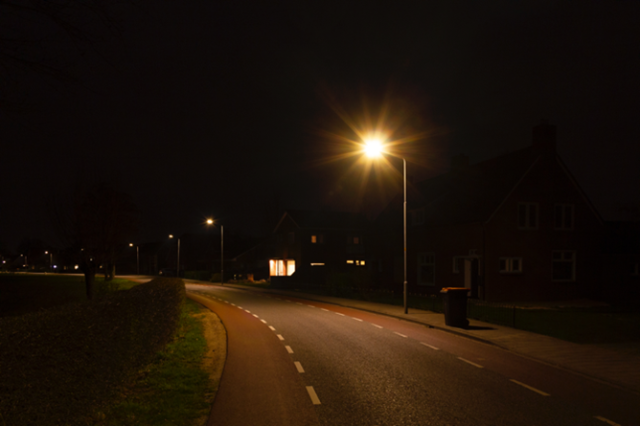
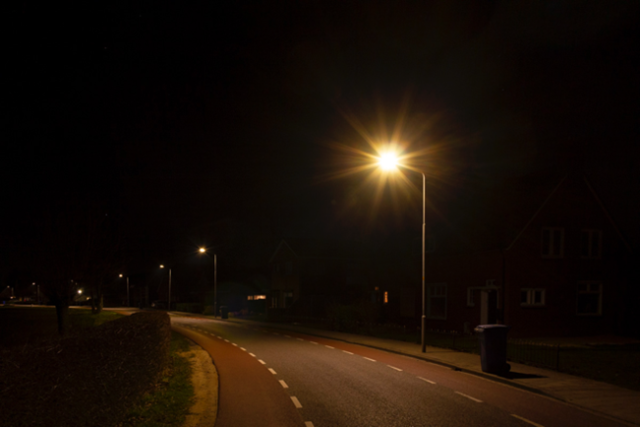
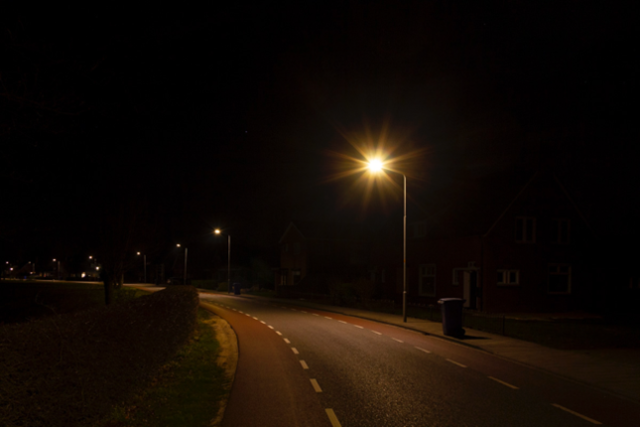
The photos below show the effect of dimming. It is (mostly) not noticeable and we do not get any comments from residents about dimmed lighting.
Telemanagement system
A telemanagement system is a system that allows us to "manage" public lighting online. By adding intelligence to a fixture, the light can be controlled remotely (turn the light brighter or less bright at any time). But it is also often possible to see from behind the computer whether a light is on or malfunctioning.
Detection
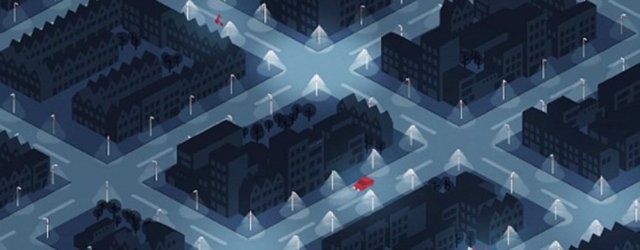
A detection system can be "attached" to a telemanagement system. This is an eye that registers whether there are traffic participants. The light then turns on or gets brighter when someone approaches. The light turns on (or burns brighter) a number of masts ahead of time and then slowly turns off (or burns less brightly) after a certain period of time. This can save a lot of energy because the light is on (or brighter) only when it is needed. The cost of such a system is (still) relatively high.
Mark
In recent years, many alternatives to lighting have been developed. For example, line markings, cat's eyes, or reflective signs can also be used to indicate the course of the road. This increases road safety and/or the comfort of road users. Public lighting is then no longer necessary or is only installed where necessary as a supplement. More and more (innovative) marking techniques are coming onto the markt offer better results than current techniques. We can divide markings into passive and active markings.
Passive marking
The course of the road is indicated by signs, lines, speed bumps and roadside bollards fitted with reflective material. The marking is visible in the dark when illuminated by one's own headlight or that of another vehicle.
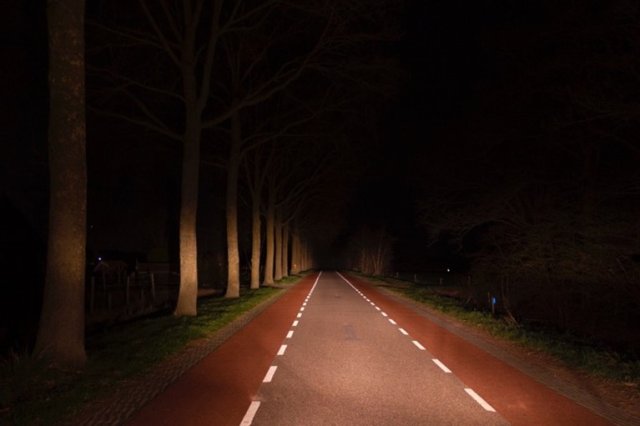
The reflectivity keeps improving, and there are also several models available. Reflective posts and warning barriers ensure that a curve or T-intersection is clearly visible.
If there’s a streetlight at the location, we only see the light and no longer the road.
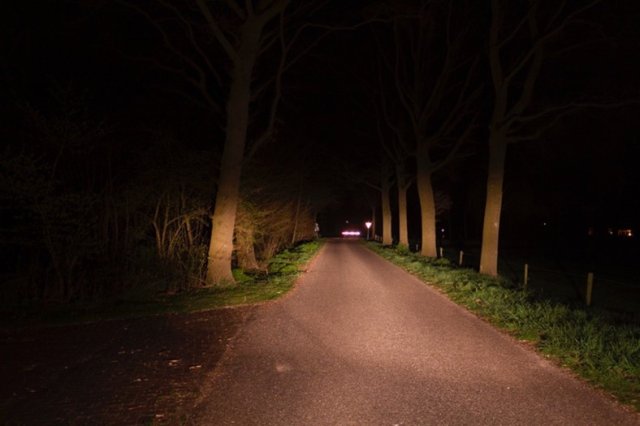
Glass globes, also known as cat's eyes, in the road surface are increasingly used. For example, you can easily see how the curve is going.
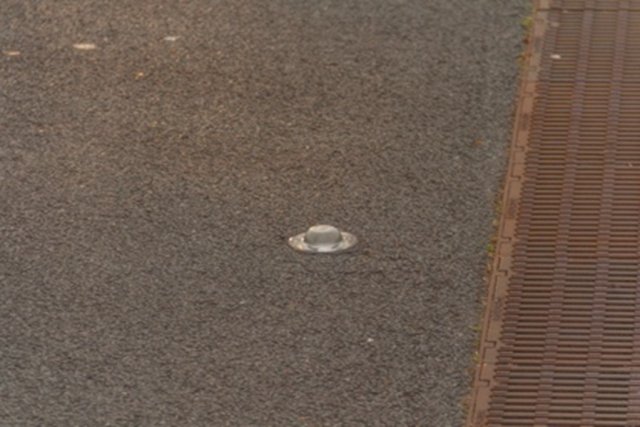
There is also paint with added glass beads for increased reflection of white lines or arrows on the road. These are less effective and we do not apply them.
Active marking
Active markings feature a light source, usually an LED, that emits light on its own. It is powered by solar energy or the electrical grid. Due to energy consumption, the costs of active markings are higher than those of passive markings. Therefore, they are used only when markings based solely on reflection do not provide sufficient safety. This may be the case on a road where vehicles travel at higher speeds (in which case headlights have a relatively shorter range) or when there is more ambient light, making the reflection less visible.
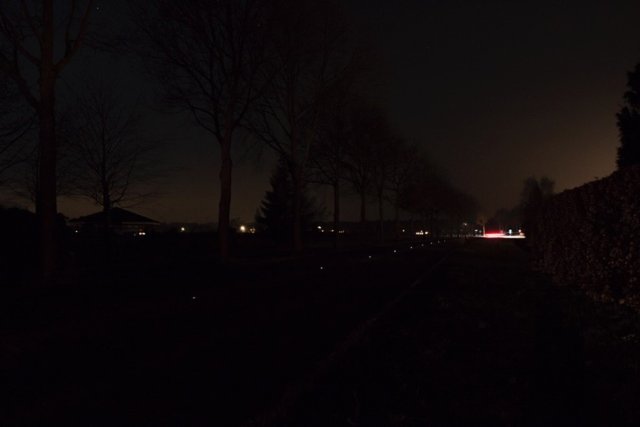
Another new technique is "glow in the dark. With this, even entire lines are actively marked. The lines absorb light during the day and emit it in the dark. It can be combined with a connection to the electricity grid or powered by a solar panel. The cost is (still) high and it cannot yet provide light long enough.
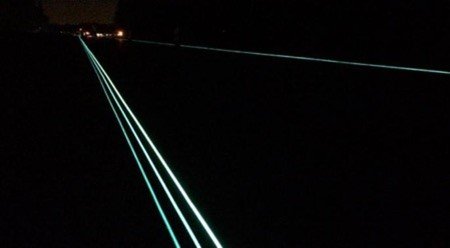
We consider the right solution for each situation.
Roadway reflection
When a road is newly constructed or receives a new surface layer, the municipality may choose what is known as a reflective road surface. This can be a lighter road surface with light crushed stone or with reflective materials such as glass beads. This technique is under development.
With a reflective road surface, you can get by with a lower power lamp. Often lampposts are no longer needed at all with a reflective road surface.
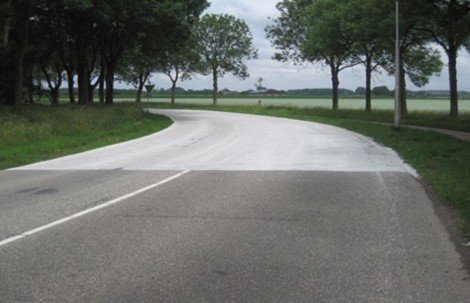
Other infrastructural modifications to the road course
When a traffic unsafe situation arises, a choice can be made to put more lights on the road. But sometimes it is more effective to modify the road itself, for example by installing highly visible narrowing and speed bumps.
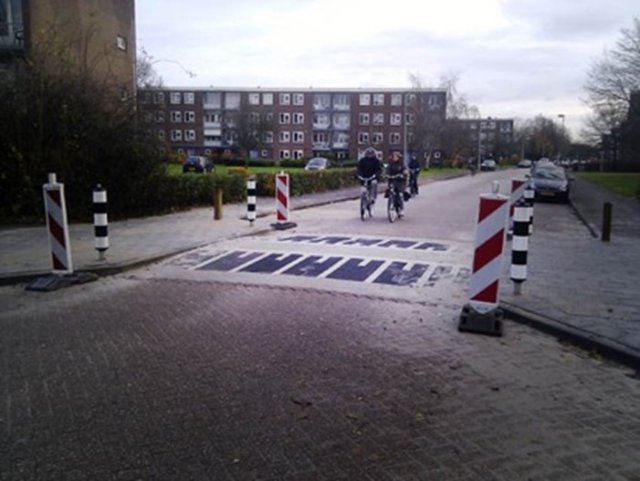
Do not illuminate unless
'Don't light unless' means that when we build or reconstruct a road, we first look to see if we can modify the road design. For example, remove a curve from the design and make the road straight. This is often not possible in practice.
Unable to adjust the design, we look at marking and reflection. First, we look at passive marking (for example, cat's eyes) or reflection. If that is not possible, we look at active marking (for example, LED lights in the axis of the road).
If all that is not possible or sufficient and we still need light, we install lighting that is as energy efficient as possible. The light is on only at those times when it is needed with the amount of light that is desirable.
This is how we do it from now on
- For each situation, we determine the most energy-efficient and sustainable solution that fits our budget and the state of the art.
- We follow new techniques, but do not have the ambition to be a frontrunner.
- We are looking at using new techniques to make smarter use of light and dark.
- Newly installed lighting is fitted with a telemanagement system as standard. We examine per situation to what extent the light can be dimmed. This must not compromise traffic safety.
- Where it makes sense, we apply detection.
- Our policy for new situations is "do not lighten unless.