Road safety and social safety
When we talk about safety, light is often one of the aspects related to it. Light is emotion and therefore a loaded topic. We know of two types of safety:
- Road Safety
- Social security
Road Safety
We talk about road safety when we can travel from A to B safely. It is about the safe and smooth flow of traffic. There are many factors that affect road safety. How is the road laid out? Are there many obstacles? Are there many blind curves in it? Are there different road users?
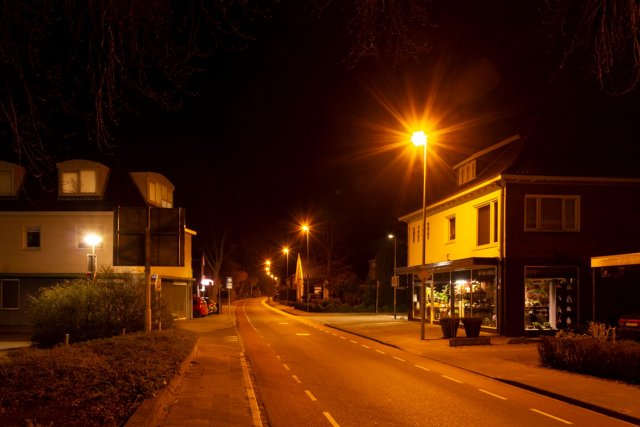
To improve visibility in the dark, we can install public lighting in some locations. But there are also other, often better, alternatives. Think of cat's eyes (glass spheres that reflect light) or reflective lines that clearly show the course of the road.
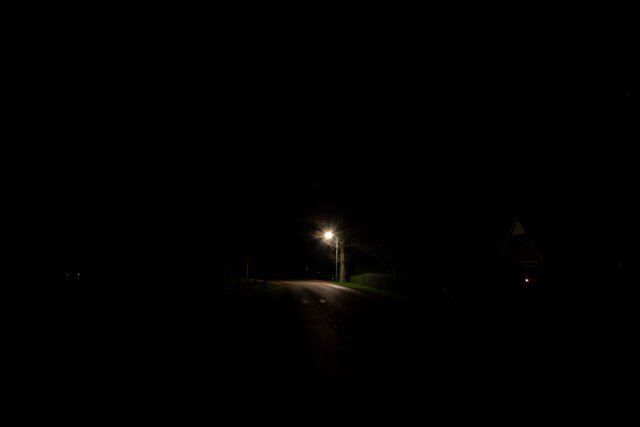
If one lamppost shines in the distance on a relatively dark road, our eye is drawn to it. We then cannot see the road properly.
Alternatives
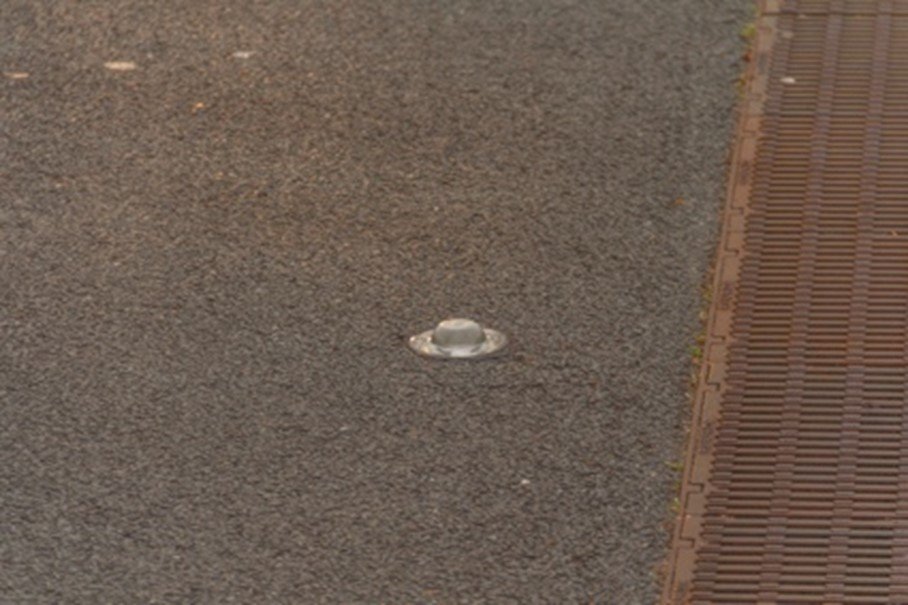
There are now many solutions that can improve road safety. For example, reflective lining, cat eyes or a lighter road surface. We call this passive marking.
There are also LED lights that can be placed in the axis of the road or berm posts that give light. We call this active marking. The latter category requires electricity (mains or solar power).
Social security
Social safety can be divided into:
- Objective social safety: is measurable, such as the number of burglaries. Many burglaries occur during the day, such as when someone is running an errand and leaves a window open.
- Subjective social safety: is the feeling of safety. This is not measurable and is different for everyone. What are your experiences? How well do you know the environment? What are you used to? These and many other factors determine your sense of safety. Social safety is a lot harder for us to deal with than traffic safety.
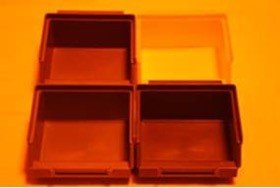
The color of lighting also affects social safety. With old conventional orange lighting, everything appears red. Although we find it a cozy color, in case of an emergency it does not reflect the right colors. As a result, we misdescribe what we have seen. The photo below shows the same color trays. The first photo shows the actual colors. The orange conventional lighting makes the trays all appear orange/red in the second photo.

Mock security
Many people report feeling safer when there is light. That's their feeling. But is it really safer? You can see someone coming down the road. But are there people nearby who can help if something happens? In other words, is there enough social control? If there is not, we speak of false security.
Laws and regulations
Civil Code
In the Netherlands, we are not obliged to install public lighting. However, we do have to maintain the lighting properly and the principle of liability applies: if the public lighting does not meet the requirements that road users are entitled to make of it, they can hold the municipality liable for injury and damage (Book 6 of the Civil Code, Article 6.162 ff. and Article 6.174).
The liability principle relates only to the road safety function of public lighting.
Public Lighting Directive
We have the NPR13201/A1 in the Netherlands. This is not a law, but a recommendation/directive. We are also allowed to deviate from it. The guideline gives advice on:
- Amount of light on the street (horizontal luminosity). This depends on the location, type of road and how much traffic there is.
- Amount of light at 1.5 m height. At this height there is also, for example, light from shop windows, from headlights of cars, light from houses. Therefore, this value is difficult to measure. Also, the value in the guideline is very high.
- Distribution of light on the road. The better the distribution is, the fewer black spots there are on the road and the better we can move to lower light levels. It also allows us to avoid the effect of light-dark-light (sun between trees). In some locations, light distribution is important for social safety, such as in shopping center areas and in residential areas. Or for traffic safety on through roads.
This is how we do it from now on
- Traffic safety is key, but that does not mean we automatically light everything.
- The basis is "do not light unless there are no alternatives for traffic safety and a traffic-safe situation can be achieved only with lighting.
- We do not light for social safety, except in mall areas where lighting also provides atmosphere.
- We are going to avoid false security in new locations.
- If we illuminate, in residential neighborhoods and center areas we choose a color with good color rendering and with which faces are recognizable.
- We illuminate at maximum 75% of the guideline in terms of light intensity. The uniformity is as good as possible (in existing situations depending on the distance between masts) on through roads and roads in the center area. We do not maintain a requirement for vertical light intensity.