
Public lighting laws and regulations
The rules for the use of public lighting in the Netherlands are described in laws and recommendations. They also describe who has what responsibility when it comes to construction and maintenance.
Laws surrounding public lighting
Civil Code
In the Netherlands, we are not obliged to install public lighting. However, we do have to maintain the lighting properly and the principle of liability applies: if the public lighting does not meet the requirements that road users are entitled to make of it, they can hold the municipality liable for injury and damage (Book 6 of the Civil Code, Article 6.162 ff. and Article 6.174).
The liability principle relates only to the road safety function of public lighting. Social safety and livability are not considered here, at least if they do not affect traffic safety.
This involves strict liability. The road user does not have to prove the fault of the road operator, but rather the dangerous condition of the road (equipment) and the danger it creates. In appropriate cases, the municipality must prove that it cannot reasonably be blamed for the lighting quality and maintenance of the lighting installation.
Nature Protection Act
The Nature Protection Act protects habitats of various animal and plant species. New activities in or near a Natura 2000 area or changes that could negatively affect protected species require a permit or exemption, respectively. This also applies to public lighting. If lighting is demonstrably disruptive to certain species, it can be decided on the basis of legislation that the proposed lighting must be modified or removed.
Advice on public lighting
Public Lighting Directive
We have the NPR13201/A1 in the Netherlands. It is not a law, but a recommendation/directive. We are also allowed to deviate from it. The guideline gives advice on:
- Amount of light on the street (horizontal luminosity). This depends on the location, type of road and how much traffic there is.
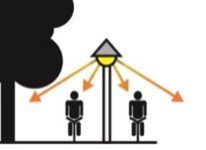
- Amount of light at 1.5 meters height (vertical light intensity). At this height, there is also light from shop windows, from headlights of cars and light from homes, for example. Therefore, this value is difficult to measure. Also, the value in the guideline is very high.
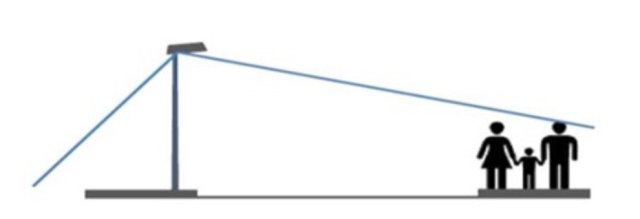
- - Distribution of light on the road. The better the distribution is, the fewer black spots there are on the road and the better we can move to lower light levels. It also allows us to avoid the effect of light-dark light (sun between trees). In some locations, light distribution is important for social safety, such as in shopping center or residential areas. Or for traffic safety on through roads.
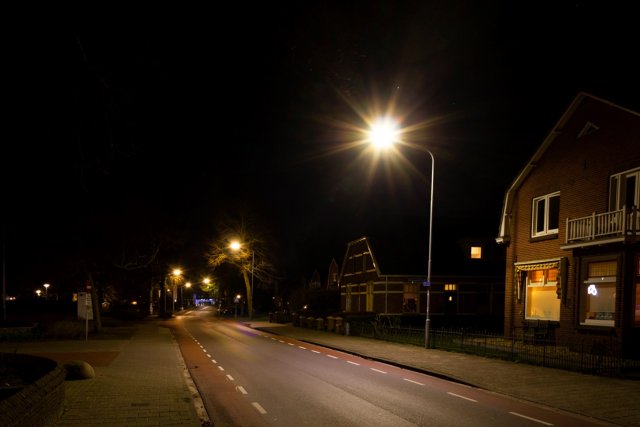
Hallmarks
We deal with two quality marks. The Politie Keurmerk Veilig Wonen and the Keurmerk Veilig Ondernemen.
Police Hallmark Safe Housing
The Politie Keurmerk Veilig Wonen (PKVW) is not an obligatory hallmark. It consists of the certificates 'Safe Environment' and 'Secure Dwelling'. Project developers often use this hallmark. Within the quality mark there is a distinction between existing construction and new construction and between a house and its surroundings.
For public lighting in the municipality, the "Safe Environment" certificate is important. The PKVW has as a requirement:
- illuminate back alleys;
- guideline for public lighting fully adhere to.
Many back paths belong to the housing association and not to us. We have not been lighting our back paths for years.
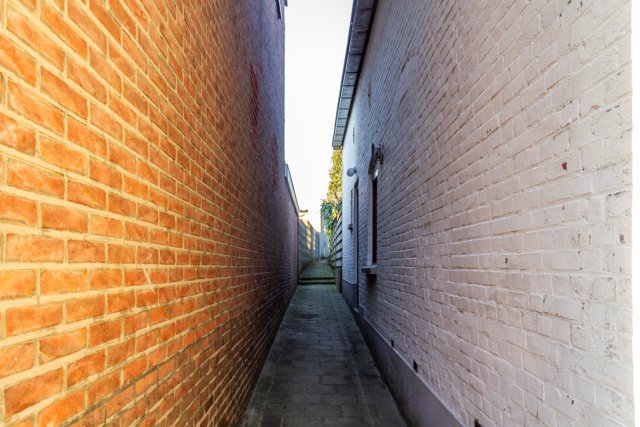
Property developers often use the seal of approval as a selling point because of the sense of security and the discount it provides on insurance premiums. The certificate in question is the "Secure Home" certificate. The certificate covers the home itself, the hardware and the exterior lighting on the home. Property developers can issue a PKVW 'Secure Dwelling' certificate on new construction projects, but not the 'Safe Environment' certificate. Residents are then still entitled to a discount on their insurance premiums.
Hallmark Safe Business
The Keurmerk Veilig Ondernemen (KVO) is a hallmark for business parks, outlying areas and shopping areas. Agreements are made between entrepreneurs, associations, police, fire department and the municipality about various matters. These agreements often include public lighting.
Installation Responsibility
Underground public lighting is connected to the network of grid operator Liander. Above ground, each municipality must appoint an installation manager and various other persons. This allows the municipality to ensure safety when working on electrical objects in the low-voltage area according to the NEN 3140 'Operation of Electrical Installations- Low Voltage'. Liander is responsible for the underground network.
This is how we do it from now on
- Maintain a maximum of 75% of the horizontal light intensity on the road. In mall and entertainment areas, we often have a little more light.
- Best possible distribution of light on the road where desirable. The existing distance between lampposts is the determining factor.
- Do not maintain a requirement for amount of light at 1.5 meters height. Many more lampposts would have to be added. That is not desirable for us and the surrounding communities.
- We comply with the Nature Protection Act.
- Do not maintain a Police Quality Mark Safe Housing for public lighting.
- No Safe Business Certification for public lighting. Our policy plan 'Light in the municipality of Aalten' is leading in terms of the amount of light.
- Back paths we do not illuminate.
- Operational installation responsibility lies with the contractor.